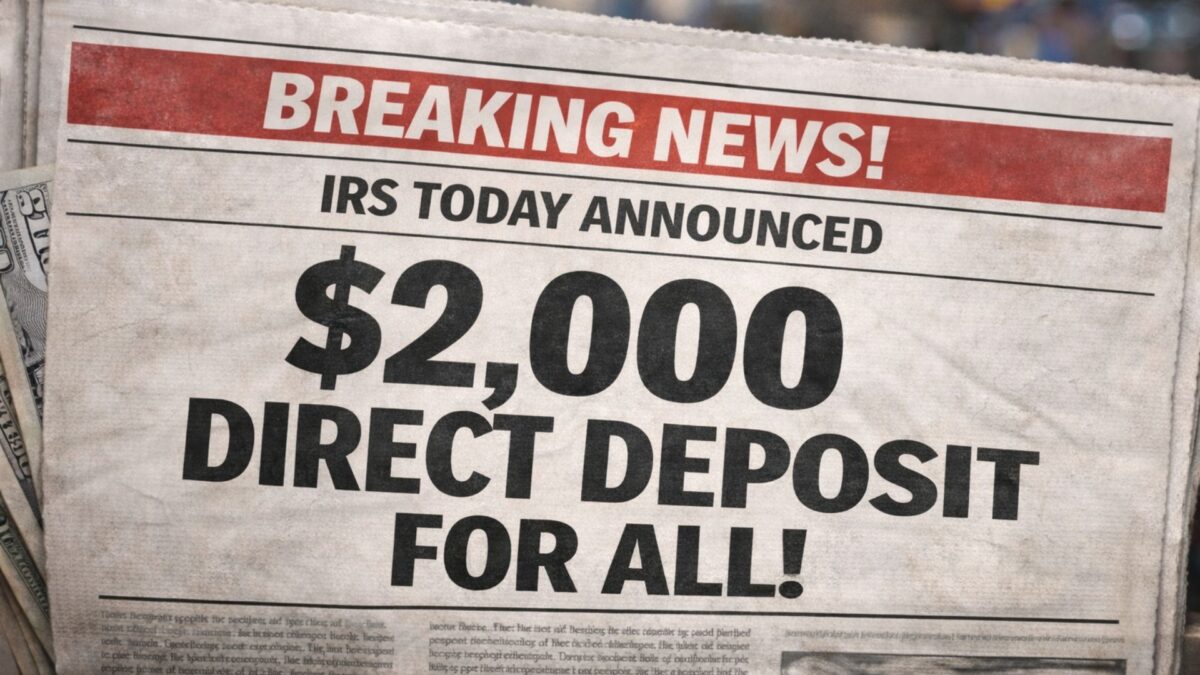
As January 2026 unfolds, many Americans are grappling with rising costs for housing, food, utilities, and other essentials. The Internal Revenue Service (IRS) has brought welcome news with a $2,000 direct deposit aimed at providing quick financial relief to qualifying low- and middle-income families. This one-time payment requires no applications or repayments, using existing tax data for fast delivery to ease immediate economic pressures.
Whether you’re managing household budgets or facing unexpected expenses, this initiative could offer a significant boost. By automating the process, the IRS ensures efficiency and accessibility. In this guide, we’ll break down everything you need to know about eligibility, timelines, and preparation steps to help you maximize this opportunity.
Key Details of the $2,000 IRS Direct Deposit Program
The $2,000 IRS direct deposit is a special relief measure separate from regular tax refunds or recurring benefits. It draws directly from your 2024 or 2025 federal tax returns, making it straightforward and paperwork-free for most recipients.
This lump-sum payment arrives either electronically or via mailed check, focusing on speed to address urgent needs like winter heating bills or grocery costs. It’s designed for those hit hardest by inflation, without affecting your future tax filings.
- One-time benefit: Use it wisely as it won’t repeat.
- No strings attached: No repayment or income reporting required.
- Automated selection: Based on verified IRS records for simplicity.
With economic challenges persisting, this payment acts as a timely buffer, allowing families to prioritize essentials and reduce financial stress during the early months of the year.
Why This Program Matters Now
In today’s economy, where everyday prices continue to climb, targeted aid like this makes a tangible difference. It supports budgeting for seasonal expenses and helps bridge gaps until tax season fully ramps up.
Understanding its structure empowers you to plan ahead effectively.
Who Qualifies for the January 2026 IRS Payment?
Eligibility for the IRS $2,000 payment centers on your income level, filing status, and residency. Low- and middle-income earners from recent tax years form the core group, with adjustments for household size.
You’ll need a filed 2024 tax return or registration via the IRS Non-Filer portal. A valid Social Security number and at least six months of U.S. residency in 2025 are mandatory prerequisites.
- Income limits: Tied to adjusted gross income from 2024 filings.
- Residency requirements: Proven U.S. presence for half of 2025.
- ID verification: SSN or ITIN required.
- Family enhancements: Extra support for dependents and claimed credits.
This criteria ensures aid reaches those most in need, accounting for varying living costs across regions. Double-checking your tax profile can uncover potential qualifications you might overlook.
Common Eligibility Pitfalls to Avoid
Outdated filings or missing dependent info often disqualifies otherwise eligible individuals. Families with children or elderly relatives may see boosted amounts based on prior claims.
Proactive review promotes equity in distribution.
Payment Schedule: When Will Funds Arrive?
Direct deposits start on January 12, 2026, in organized phases to handle high volumes smoothly. Priority goes to those with up-to-date bank info, often depositing within days.
Mailed checks roll out shortly after, typically mid-to-late January. Delays can stem from verification processes or incomplete records.
- Phase 1 rollout: Electronic transfers for registered accounts from January 12.
- Phase 2: Paper checks for the rest later in the month.
- Timeline variables: Bank speeds, IRS reviews, and data accuracy.
Aligning this with your bill cycle amplifies its value, providing relief right when needed most.
Tips for Faster Receipt
Ensure your routing and account numbers are current to skip mailing delays. Monitoring official channels keeps you informed of any shifts.
How to Prepare for Your $2,000 Payment
Preparation is straightforward and mostly automatic, but key actions secure your funds. Access your IRS online account to confirm address, banking details, and tax status.
Recent life changes, such as address updates or bank switches, require prompt notifications to prevent issues like returned payments.
- Head to IRS.gov and log in or create an account.
- Review and update contact and financial information.
- Verify your 2024 return for errors or omissions.
- Watch for deposit alerts in your account dashboard.
These habits not only lock in your payment but strengthen your overall tax compliance for future benefits.
Staying Scam-Free
Stick to official IRS tools—avoid third-party sites promising extras. Scammers target these programs, so vigilance protects your info and funds.
Handling Borderline Cases and Partial Payments
If your income slightly exceeds limits, a prorated amount may still apply, calculated from 2024 data. This flexible system extends help to near-qualifiers facing cost pressures.
For instance, minor overages could mean $1,500 or adjusted figures, promoting broader access. Analyze your tax summary for a rough estimate.
Small tweaks in records, like adding overlooked dependents, might shift your status favorably.
Seeking Clarification
IRS resources provide tools for self-assessment, ensuring fairness without manual appeals.
Making the Most of Your IRS Relief Payment
The January 2026 $2,000 IRS direct deposit serves as a crucial support amid ongoing economic hurdles. Its reliance on existing data guarantees swift, widespread delivery to those who qualify.
By staying updated and prepared, you position yourself for seamless receipt. Use the funds strategically—perhaps tackling debts, stocking essentials, or starting a savings plan.
While not a complete solution, it offers breathing room for better financial health. Regularly visit IRS.gov for updates, and consult professionals for tailored advice.
Disclaimer: This article shares general info only and does not constitute financial, tax, or legal advice. Details like amounts, dates, and rules follow IRS guidelines and may change. Verify with IRS.gov or experts for the latest.
Who is eligible for the $2,000 IRS direct deposit in January 2026?
When do direct deposits start for the $2,000 payment?
Do I need to apply for the IRS $2,000 payment?
What if my income is slightly above the eligibility limit?
How can I check or update my payment information?
